> Blog
Why Watching Isn’t Learning: Rethinking Dental CPD
This blog explores why traditional passive CPD often falls short in dentistry and how hands-on, practical learning leads to greater skill development, confidence, and real clinical impact.
Continuing Professional Development (CPD) is essential in dentistry. It supports clinical standards, keeps knowledge current, and ensures practitioners continue to develop throughout their careers.
But not all CPD is created equal.
For many dentists, CPD still looks and feels the same as it did years ago: long lectures, dense presentations, and limited interaction. You attend, listen, take note, and then return to practice with the expectation that something meaningful will change.
In reality, it often doesn’t.
The problem with passive CPD
Traditional CPD tends to focus on information delivery. A speaker presents, the audience observes, and learning is assumed to have taken place.
The issue is rarely the quality of the content, in many cases, the speakers are highly experienced and the subject matter is relevant. The limitation is the format.
Watching something is not the same as being able to do it.
Without application, knowledge is harder to retain. Without practice, confidence doesn’t develop. And without repetition in a realistic setting, it becomes difficult to translate theory into clinical decision-making.
This is why so much CPD feels useful in the moment but has limited impact once you return to surgery.
Common issues with passive CPD include:
Limited retention of key techniques or principles
Difficulty applying knowledge in real clinical situations
Lack of confidence when implementing new approaches
Minimal change in day-to-day practice despite attendance
The result is CPD that is completed, but not always truly absorbed.
Why application changes everything
Learning becomes significantly more effective when it moves beyond observation.
Dentistry is a practical profession. Skills are developed through doing, not just watching. Whether it’s refining a restorative technique, improving surgical confidence, or understanding decision-making under pressure, real progress happens when knowledge is applied in context.
This is where many traditional CPD models fall short. They explain what to do, but rarely give you the opportunity to do it.
When learning is applied:
Techniques are retained more effectively
Clinical confidence increases through repetition
Decision-making becomes more structured and consistent
Knowledge translates directly into practice
In short, understanding becomes capability.
A more practical model of CPD
At Tipton Training, CPD is built around a simple principle: learning should be active, not passive.
That means moving beyond lectures alone and creating structured learning environments where knowledge is immediately applied.
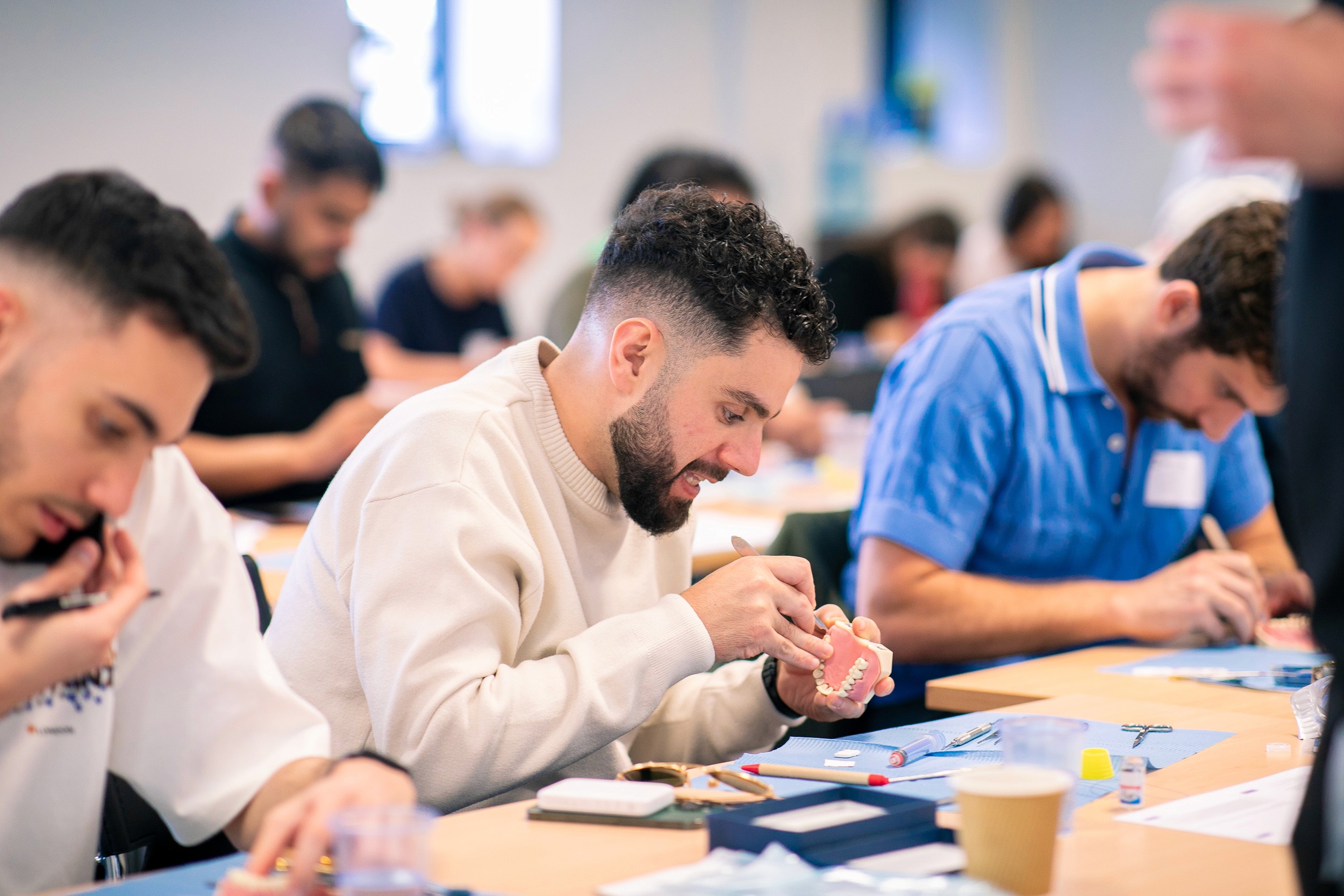
Courses are designed to combine different learning methods, including seminars and webinars to build foundational understanding, alongside hands-on practical sessions where techniques can be developed in real time.
Crucially, this is supported by supervised clinical training, including live surgical exposure where appropriate. This allows delegates to observe, participate, and develop skills in a controlled but realistic clinical environment.
The emphasis is always on bridging the gap between theory and practice, ensuring that what is taught is directly relevant to what happens in clinic.
From attendance to impact
CPD should not be measured by time spent in a lecture theatre or number of certificates collected.
Its value lies in what changes afterwards.
Did it improve your clinical judgement?
Did it increase your confidence with patients?
Did it change how you approach procedures in practice?
If the answer is no, then the learning has not fully delivered on its purpose.
This is why the distinction between passive and active CPD matters.
One informs. The other transforms.
How Tipton Training is different
Tipton Training has been developed around the belief that postgraduate dental education should be practical, structured, and directly relevant to clinical work.
Rather than focusing solely on theoretical delivery, courses are designed to immerse delegates in real learning environments where skills are actively developed and reinforced.
This includes a combination of:
Structured teaching sessions
Interactive seminars and webinars
Hands-on practical training
Supervised clinical and live surgical experience
The aim is to build confidence and capability that carries directly into everyday practice.
Watching a procedure can build awareness, understanding a technique can build knowledge. But confidence in dentistry comes from doing.
That is the difference between passive CPD and active, practice-changing training, and it is the difference Tipton Training is focused on delivering.
View our upcoming courses below for enhanced CPD that goes above and beyond.
View postgraduate dental certificates